-scaled-1.png )

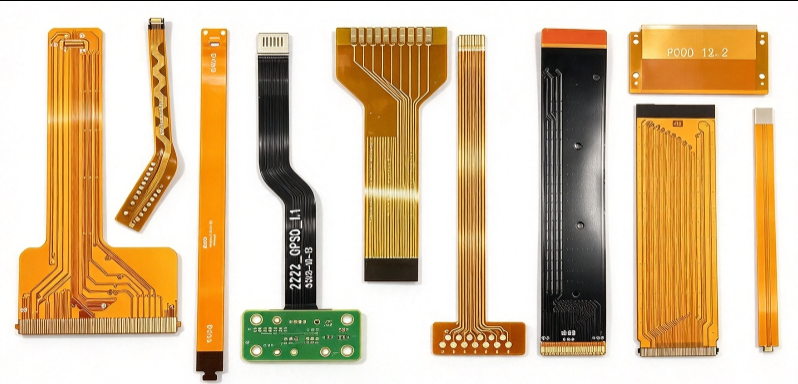
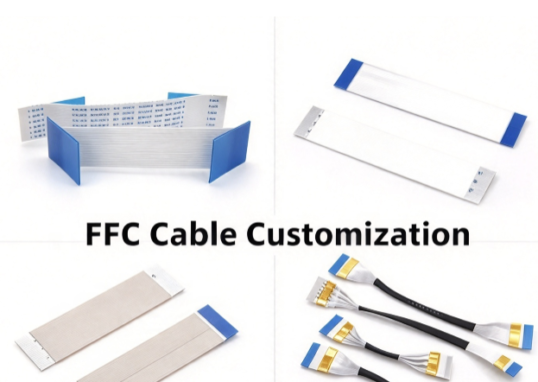
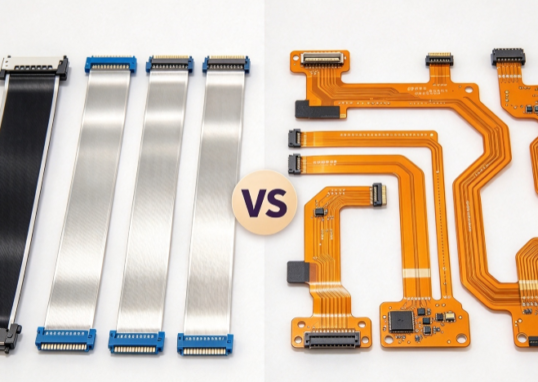
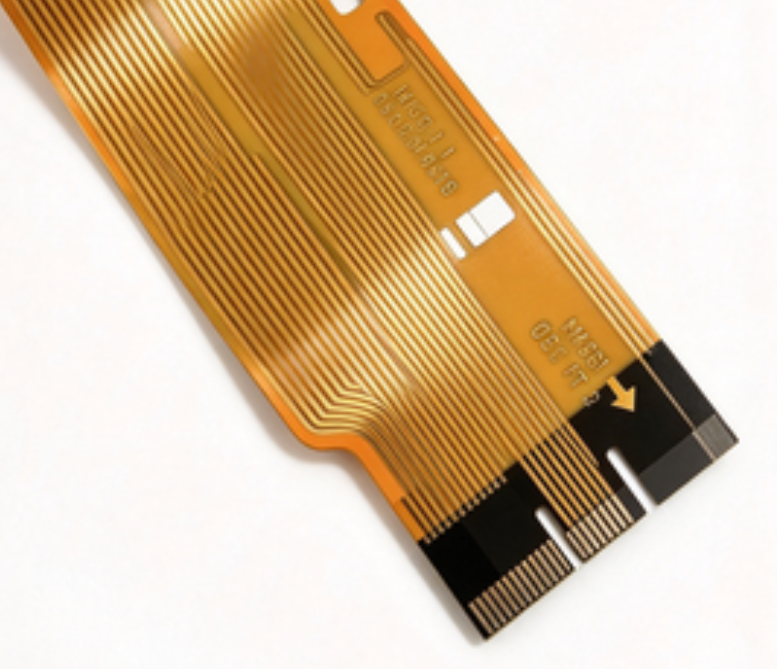
FPC is not a standard product, becasue every FPC is custom-designed for a specific device, shape, and function. Below are the most common FPC types we build — and the situations where each one is the right choice.
When to use it:
- Your circuit is simple, with no crossovers
- Cost is a priority
- The application does not require high flex life
- You need a basic connection between two points
Typical applications: Consumer electronics, simple sensor connections, basic display modules
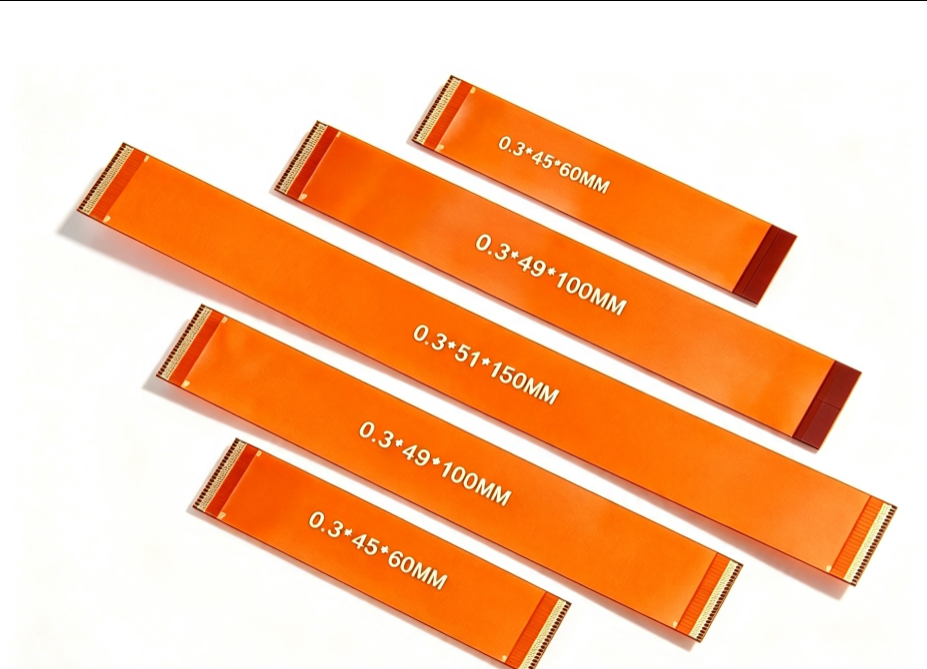
When to use it:
- Your circuit is complex, with multiple signal layers
- You need controlled impedance or shielding between layers
- The application requires high reliability and dense routing
- Space is extremely limited
Typical applications: High-end medical devices, aerospace, high-speed data systems
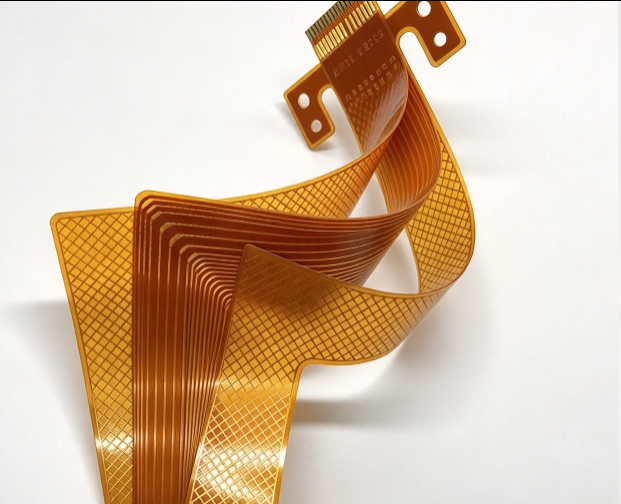
When to use it:
- You need to mount resistors, capacitors, ICs, or connectors directly on the FPC
- The circuit must be integrated into a single flexible assembly
- You want to reduce the number of separate boards and connectors
- The design requires SMT assembly on a flexible substrate
Typical applications: Camera modules, sensor assemblies, wearable devices, medical instruments
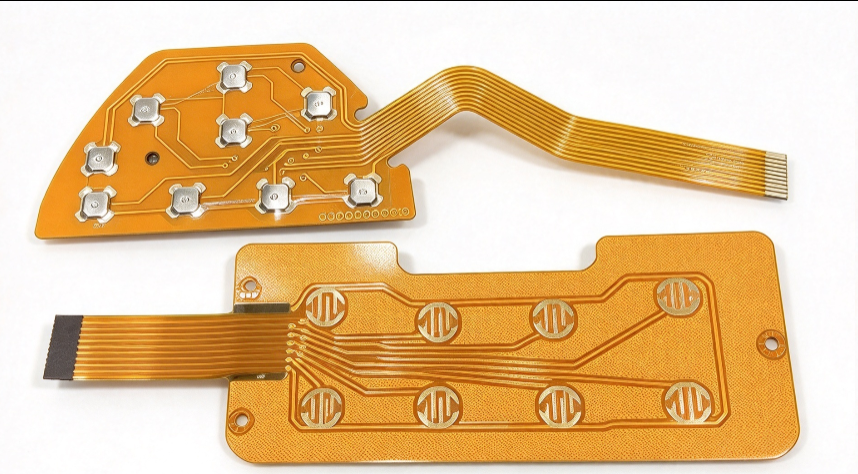
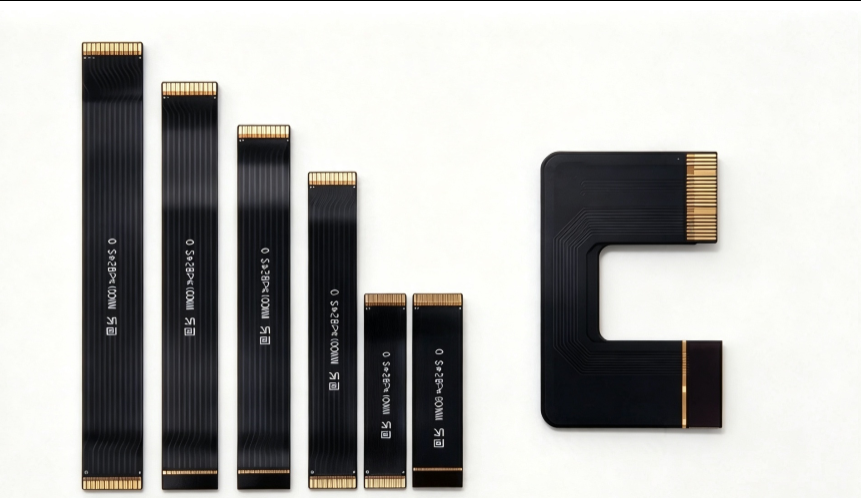
When to use it:
- The conductors need to be routed independently at one or both ends
- You need to terminate each conductor separately
- The connection area requires reduced mechanical stress
- The cable must fit into multiple connection points
Typical applications: Camera modules, sensor arrays, multi-point connections
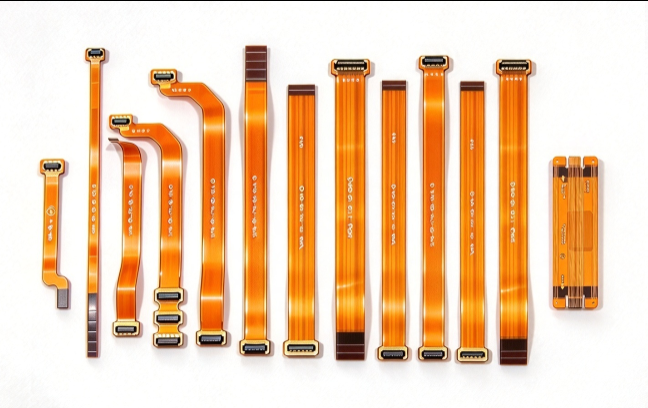
When to use it:
- The FPC needs to be fixed directly to the housing or chassis
- Vibration could cause the cable to shift or pull out
- You need a secure mounting point without adding extra brackets
- The assembly requires precise alignment during installation
Typical applications: Automotive electronics, industrial control panels, medical devices
When to use it:
- The individual conductors need extra insulation
- The application involves abrasion, oil, or chemicals
- The cable must survive repeated flexing in a harsh environment
- You need protection without losing flexibility
Typical applications: Medical devices, industrial equipment, automotive sensors
When to use it:
- The FPC must fit into a non-flat space or follow a 3D path
- The device requires the cable to bend, fold, or wrap around components
- You need to eliminate a separate connector or bracket by forming the FPC directly
- The assembly requires a specific shape to align with the housing or PCB
Custom shapes we build:
- Bent FPC — pre-formed bends at specific angles
- Folded FPC — folded into a Z-shape, U-shape, or custom fold
- Curved FPC — follows a curved surface or housing contour
- Spiral FPC — coiled for space-saving routing
- Irregular outline — any cutout, notch, or asymmetric shape
- 3D routing — multi-plane routing within a single FPC
Typical applications: Wearable devices, camera gimbals, medical catheters, foldable electronics, robotics
Not Sure Which Type You Need?
Send us your drawing, schematic, or application description. Our engineers will review it and recommend the right FPC construction for your design — including layer count, material, shielding, shape, and assembly.
We’ll quote within 12 hours. No MOQ. Prototype to production.
Author

xl885479@gmail.com